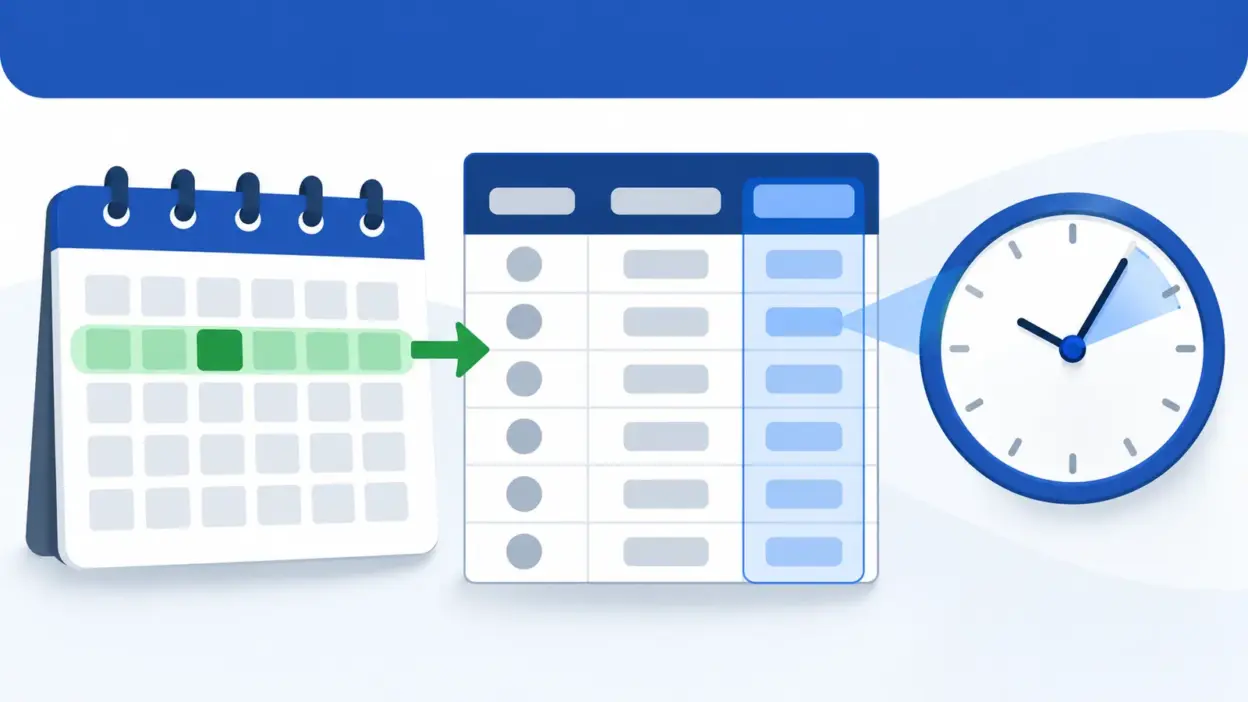
A dear lottery weekly chart is a date-wise record of past first-prize entries, arranged by draw time. This guide shows you how to match the date, 1 PM, 6 PM or 8 PM slot, series and five-digit number, then confirm any possible match against the complete result sheet.
What you need before you start
Keep these three things ready:
- Your ticket or ticket details, including the draw name, date, time, series and number.
- The correct chart page for the week, month or year you want to check.
- The full result sheet or the official Nagaland State Lotteries results page for final verification.
Our Dear lottery result chart is designed for a quick first-prize lookup. It is not a substitute for the government result gazette, and it does not by itself prove that a prize can be claimed.
Step 1: Match the ticket date and draw time
Why this matters: the same date has separate results for separate draw slots, so a correct number in the wrong column is not a match for your ticket.
- Read the date printed on your ticket.
- Find that date in the chart’s date column.
- Select the column for the draw time printed on the ticket: 1 PM, 6 PM or 8 PM IST.
- Check the draw name if it appears on the ticket or result sheet. The weekly name changes by weekday and time slot, so use it as an additional check rather than relying on the name alone.
The site’s draw schedule lists the 21 weekly draw names. For example, the Saturday columns correspond to the Saturday draws, while the date and time still tell you which result row to use.
What success looks like: you have one exact date-and-time cell selected. You are not comparing your ticket with the whole row or with another slot from the same day.
Step 2: Read the weekly chart entry
Why this matters: a chart entry normally combines a series code with a five-digit first-prize number; leaving out either part can create a false match.
Read the selected cell from left to right, or follow the labels used on that page. Some tables show the five-digit number first and the series beside it; a full ticket-style entry is often easier to understand as series + five-digit number.
| Chart part | What it tells you | What to do |
|---|---|---|
| Date | The calendar day of the draw | Match it to the ticket date |
| Draw column | 1 PM, 6 PM or 8 PM IST | Use only the ticket’s time slot |
| Series | The letter or code attached to the winning entry | Keep it with the number |
| Five-digit number | The first-prize ticket number | Compare all five digits in order |
| Dash or blank | No entry is displayed in that cell | Check whether the draw has taken place and use the full sheet |
For example, an entry shown as 30467 70B can be read as the five-digit number 30467 with series 70B. When checking a ticket, preserve leading zeroes and compare the series as well as every digit. Do not rewrite 06366 as 6366.
The chart is mainly a compact first-prize index. It does not normally list every second, third, fourth or fifth prize number. If you need to check other prize tiers, open the linked full result for that date and draw.
What success looks like: you can state the exact date, slot, series and five-digit entry you are checking without guessing which part of the cell is the number.
Step 3: Read the monthly chart
Why this matters: a monthly chart puts many daily rows in one view, which is faster for an old result but easier to misread on a small screen.
- Open the October 2026 Dear lottery chart when that is the month you need.
- Scroll to the date row instead of searching by number first.
- Move across that row to the correct 1 PM, 6 PM or 8 PM column.
- Read the complete series-and-number entry and open the linked full result if you need the other prize tiers.
- For another month, use the 2026 chart archive and choose the matching monthly page.
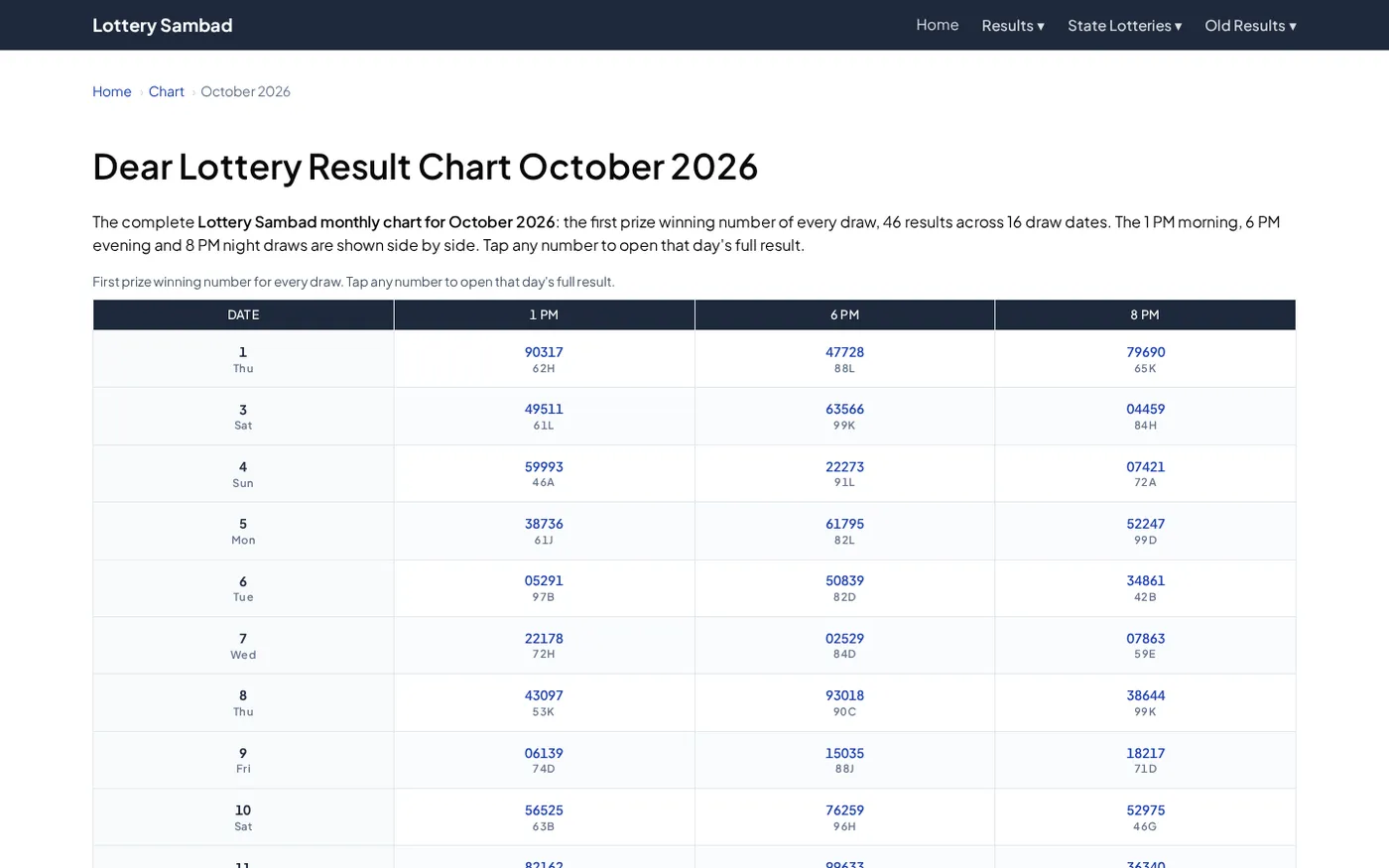
On a phone, rotate to a wider view only if the columns are difficult to see. Avoid reading across a neighbouring row: first anchor your finger on the date, then move horizontally to the time column.
What success looks like: you have found one row for the right date, used one time column, and recorded the full entry without mixing it with the row above or below.
Step 4: Use the chart to find an old first prize
Why this matters: a chart is most useful as an index for a known date, not as a page for scanning random numbers.
Use this order:
- Start with the ticket date, including the year.
- Open the relevant monthly chart or the year archive.
- Find the date row and select the ticket’s draw-time column.
- Note the series and five-digit number exactly as displayed.
- Tap the entry or the date link, where available, to open the full result for that draw.
- Compare the full result sheet with the physical ticket before taking any further action.
Our archive begins on 7 January 2026. Use the year and monthly archive pages for records within that range; for a date that is not shown or for the final authority on a result, consult the government result gazette.
What success looks like: you have moved from a monthly index to the correct date-specific result sheet, with no reliance on a cropped image or an unlabelled number.
Step 5: Verify a possible match before a claim
Why this matters: the chart is a quick reference, while the official result sheet and the original ticket are the documents to use for verification.
Check each item in this order:
- Date: it must be the same calendar date.
- Draw: it must be the same 1 PM, 6 PM or 8 PM slot and the same draw name where shown.
- Series: the series or code must match exactly.
- Number: compare all five digits, including any leading zero.
- Prize tier: confirm whether the entry is a first-prize result or another tier on the full sheet.
- Source: compare with the Nagaland State Lotteries government results page and follow the instructions printed on the official result documents.
The Lotteries (Regulation) Act, 1998 is also available through the Nagaland State Lotteries government website. Lottery rules and claim procedures can depend on the relevant state, so check the current official instructions rather than relying on an old chart or a forwarded message.
What success looks like: the date, slot, series, number and prize tier agree across the ticket and the official result document. If any one item differs, treat it as unverified.
Why past chart entries cannot predict a future draw
A Dear lottery chart records completed draws. It does not create a pattern that can reveal the next result, and a number that appeared before does not become more or less likely because of its history.
The Lotteries (Regulation) Act, 1998 defines a lottery around prizes distributed by lot or chance. That is why a weekly or monthly chart should be used for checking a past result, locating a dated record and comparing documents—not for predictions, number selection or paid “sure result” claims.
Troubleshooting chart errors
The date is not in the chart. Confirm the year and open the matching monthly page. The archive covers dates from 7 January 2026 onward; for any record outside the displayed archive, use the state lottery’s result gazette.
The number looks right but the series is different. Do not treat it as a first-prize match. A series is part of the entry, so verify the complete series-and-number combination on the full result sheet.
The chart shows the number before the series. That is only a display order. Read the labels or linked result, keep both parts together and preserve every digit.
There is a dash in the time column. Check the date and slot first. The draw may not yet be represented on the page, or the archive may not have an entry for that cell; the government result sheet is the authority.
The screenshot and a forwarded image do not agree. Do not use an unlabelled image as evidence. Return to the date-specific text result and compare it with the official government result document.
FAQ
What is a Dear lottery weekly chart?
A Dear lottery weekly chart is a compact record of first-prize entries arranged by date and draw time. It normally lets you compare the 1 PM, 6 PM and 8 PM result columns for each day of a week or month.
Does a Dear lottery chart show every prize number?
Usually, the chart is a first-prize index rather than a complete prize list. Open the full result sheet for the selected date and draw if you need to check the other prize tiers.
How do I read the series and number together?
Match the date and time first, then read the series code and all five digits in the selected cell. Some charts display the five-digit number first, but the series still belongs to that entry and must be checked too.
Can a monthly chart predict the next Dear lottery result?
No. A monthly chart only records completed draws, and past entries do not determine a future draw. Use it to verify a dated result, not to choose numbers or follow prediction claims.
Where should I verify a possible match?
Open the full result for the exact date and slot, keep the original ticket, and compare it with the current result information from the relevant state lottery authority. The Nagaland State Lotteries results page is the government source for Nagaland result gazettes.